Showing posts with label mythology. Show all posts

Friday, July 01, 2016

Book review: Ramayana - Stolen Hope (Part III) by Shubha Vilas


Two things have changed since I read the first two installments of Shubha Vilas' Ramayana series. Firstly, I've realised that the author in question is a man - his name being Shubh(a) and not ShubhA as I'd previously thought; and secondly, my interest in the epic has peaked. The Ramayana has, for some reason, assumed an important place in my life and therefore, the author's request for a review was more than welcome. However, because my last review wasn't exactly kind, I was surprised when the author asked me for a second. As an author-in-the-making, one understands that it cannot be an easy task to place one's hard work at the altar of someone's opinion. But it is rather flattering as a critic because you know that your words are being taken seriously and objectively.  

That said, my opinions haven't much changed since the last time. While I still admire the author's crisp manner of writing, I also still find his 'moral footnotes' unnecessary, and sometimes even  mildly hilarious. I mean, how does one react to a line like this?

"Instead of tea, if one drinks a cup of responsibili-tea, the struggle to remain awake would be a happy one."

With an #smh, right? A little condescending laughter, maybe? Or just plain wonder at how Jaico's editors let these things pass? 

But then that's the author's USP. Perhaps there will be some readers who will appreciate this 'humour' (if that's what it is supposed to be), and his tendency to preach. Sometimes, there are pages where he explains the significance of certain actions of certain characters. Some of the reasons cited seem plausible; while some others seem quite preposterous. Then again, there's no contesting interpretations in mythology/religion and it is best left to the discretion of his readers. 

I, for one, ignore these explanatory sections and footnotes and read the book as one would a simple rendition of the Ramayana in prose. For those who are familiar with the epic, it helps jog one's memory pertaining to its various myths and sub-plots; and for those who are reading the Ramayana for the first time, it is a great 'starter pack'. It is a true version of the epic with no fictionalisation, as many current authors are wont to do. Don't let that strange cover illustration of what looks like Rama attacking for Jatayu mislead you.


Monday, June 29, 2015

When Rama is Sita's brother, and Hanuman, a ladies' man!


Don't outrage at the headline yet, for this is no attempt at sensationalism. This is merely letting you know that in a society just a little different from yours, the Ramayana exists differently. India's famous epic is not necessarily the one Valmiki composed, or the Amar Chitra Katha versions we read, or the one we watched on television in the 80s. Ramanand Sagar's televised version, which was adapted from Tulsidas' Ramacharitamanas is the one we are most familiar with. It is the story of virtuous Sita being abducted by the evil Ravana, and her valiant husband Rama rescuing her with the help of his devoted brother Lakshmana and the monkey army after an epic battle. It is the story of familiar moral stereotypes, that is deeply entrenched in mainstream society.

However, different social needs call for different kinds of heroes and the Ramayana has been adapted in varied ways through centuries. These versions were not created to be sacrilegious. While some versions challenged Brahmanical authority, most were the result of adapting a universal heroic figure to fit their social-cultural context. In his famous and sometimes contested essay, 'Three Hundred Ramayanas: Five Examples and Three Thoughts on Translation', A K Ramanujan talks about hundreds of versions of the epic that exist in folk, poetic and dramatic traditions. But here I list five versions which deviate most from the plot and characters we are familiar with.

1. Sita as Kali in the 'Adbhut Ramayana': Let's start with Sage Valmiki himself. Not satisfied with composing just one Ramayana, the great poet sage is said to have composed other versions and extensions like the Yoga Vashistha and the Adbhut Ramayana. The former is more of a philosophical treatise using the context of the epic, while the latter is an adbhut or a wondrous composition. Much shorter than the original maha kavya, the Adbhut Ramayana is especially notable for its characterisation of Sita. She is not the demure, helpless victim here waiting for her husband to rescue her. In fact, when Rama falls wounded and unconscious on the battle field, she assumes the fierce form of Kali and wreaks havoc upon earth. She is eventually pacified by the gods, Rama's consciousness is restored and the story moves on. If you find feminists who decry Sita's submissive role in the traditional Ramayana, point them in this direction.

(Available in an English translation by Shantilal Nagar, BR Publications)

2. Rama and Sita as siblings in 'Dasaratha Jataka': The Dasaratha Jataka is one of the earliest Buddhist versions of the epic. In what might seem like a shocking twist to most, Rama and Sita are depicted as brother and sister in this version. The duo is not banished but sent away to the Himalayas by the king Dasaratha in order to protect them from their jealous stepmother. The stepmother is the only antagonist, for there is no Ravana in this story. When things have cooled down, Rama and Sita return to Benaras and not Ayodhya and get married. As much as your morals are jarred by this incestuous turn of things, bear in mind that some communities make this provision to maintain purity of caste when there are no eligible matches.

(Available in an English translation by V Fausboll, Kessinger Publishing)

3. Lakshmana as the Ravana slayer in 'Paumachariya': One Jain version of the Ramayana is called Paumachariya, which was authored by Vimalsuri. The Jain Ramayana strips all elements of fantasy from Valmiki's version and presents a very rational view of the epic. Ramanujan avers: “When we enter the world of Jain retellings, the Rama story no longer carries Hindu values. … Paumachariya knows its Valmiki and proceeds to correct its errors and Hindu extravagances. Like other Jaina puranas, this too is a prati purana, an anti or counter-purana.”

For example, it rejects the idea of a monkey army and suggests that they were actually a tribe of warrior people with the monkey as their totem/symbol. However, the most important deviation in this version is where Lakshman becomes the slayer of Ravana. That's because Rama, being a perfect Jain, is avowed to nonviolence and cannot be a killer. Here, too, Rama is a hero for he embodies the highest ethic of the Jain religion. His valiance is reflected in his non killing. Makes perfect sense, doesn't it?

While an English translation of the Paumachariya does not seem to be available, it might be worth checking out some rare Hindi translations.

4. Lakshmana's agni pareeksha in the 'Gond Ramayani': The Gond Ramayani is a series of seven tales told in the folk tradition of the Gond tribe. Folklorist Molly Kaushal, in an interview with a leading journal, says: “The Gond Ramayani is embedded in the socio-cultural context of the Gondi community, its lifestyle and its kinship. Here women, whether they are brides or otherwise are related to the central character, play a definitive role in the movement of the plot and its culmination, which is different from the classical versions.”

This tale really begins where the traditional Ramayana ends, i.e. after Sita is rescued, and Lakshmana and not Rama is the protagonist. In the first tale, Indra's daughter Indrakamani is so besotted by Lakshmana, she flies to earth as an eagle to see him. However, she is unable to wake up or woo a sleeping Lakshmana and in frustration tears off her clothes and jewellery. When Sita sees these remnants, she tells Rama about her suspicion on Lakshmana's licentious behaviour. It is then that Lakshmana has to go through the fire ordeal to prove his chastity. Who says there is no gender equality?

(Not available in English translation, but can be experienced through folk dance performances and paintings such as the ones made under the Ramkatha project of the Indira Gandhi National Centre of Arts.)

5. Hanumana as the ladies' man in 'Ramakirti and Ramakien': In the Thai versions of the Ramayana, Hanumana's character takes on quite a central role. He is not the monkey-faced celibate but quite the ladies' man with amorous interests. When he visits Lanka, he has no qualms peeping into people's bedrooms. Even Ravana is conceived very differently in the Thai version of the Ramayana; he is seen as an erudite scholar and a powerful king worthy of respect. His quest for Sita is seen as true romantic love, albeit fatalistic. The 'Ramakirti' and 'Ramakien' are considered great entertainers by the Thai people and not so much as guides to social and moral conduct as Ramayana in India.

(Ramakien is available in an English translation by J M Cadet, Kodansha America Inc.)

This article originally appeared on scroll.in on May 06, 2015

Book review: Scion of Ikshvaku


Author: Amish Tripathi
Publisher: Westland Limited
ISBN-10: 9385152149
Number of Pages:376 Pages
Publication Year: 2015 June
Language: English
ISBN-13: 9789385152146
Binding: Paperback
RATING: 3/5

Picture this. A large royal court with an assembly of the best kings and princes. The mission: to complete an archery challenge, and the prize, the hand of a beautiful princess in marriage. The challenge would be to shoot the eye of the fish on a turntable mounted on the ceiling, while looking at its reflection in a vessel of rippling water on the ground. This would be the svayamvara scene from the Mahabharata when Arjuna competes to win Draupadi's hand, right? Wrong! This would be the Prince Ram Chandra of Ayodhya trying to win the hand of the princess of Mithila, Sita. At least that's how it is in Amish Tripathi's first book of the Ram Chandra series, 'The Scion of Ikshvaku'.

After months of advertising, in what seems to be the biggest and most expensive promotional drive for a book, Amish Tripathi's 'Scion of Ikshvaku' released on the 22nd of June, 2015. A record signing amount, full page newspaper ads, exclusive Kindle offers and even Youtube trailers (never mind the nail polish-wearing Sita) had readers waiting with bated breaths for the next offering from the extremely popular author of the Shiva trilogy. And why not? After all, he promised to re-tell India's favourite story of all, the Ramayana. Or did he?

For anyone who knows the Ramayana and expects Amish's story to be similar, 'The Scion of Ikshvaku' can come as something of a shock. But for anyone who is familiar with the author's previous works, the book meets all expectations, for Amish bends it better than Beckham. While not a great fan of his literary style, I cannot help but admire Amish for the way he manages to create completely new stories from old ones. He has an almost magical ability of retaining the essence of familiar mythological tales while spinning wildly deviating plots.

As a student of mythology, I was shocked and awed in turn by the liberties the author has taken in writing the story of Ram. But there's no pointing a finger at him for these deflections because not once does he use the word 'Ramayana'. Our literary pop star friend ingeniously calls it the Ramchandra series. And one can only smile indulgently because this is not really a deviation but tradition. Ram and Ramayana both belong to the people of India. The sage Valmiki may have been the first one to record it, but over centuries, poets and playwrights have taken creative liberties in creating their own Ramayanas. From Kamba's Tamil Ramavataram of the 12th century to Ashok Banker's Ramayana series in 2003; from Tulsidas' 16th century Ramcharitamanas to Devdutt Pattanaik's Sita in 2013, and hundreds in between, the Ramayana has served as the fountainhead of inspiration for storytellers.

Amish builds upon the Rama epic too, albeit in a very Un-Ramayana like manner. The differences are apparent right in the first page where he lists the major characters. Some deflections are surprising, some shocking and some, even amusing. Amish's Ram is very much a human hero just like his Shiva and the story is stripped of all magical elements. Neither is Ram born through divine means nor is he portrayed as the apple of everyone's eye. In fact, the first and greatest point of difference between the traditional Ramayana and The Scion of Ikshvaku is Ram's projection as an unloved prince. His father, king Dasaratha considers Ram's birth inauspicious and blames him for all his misfortunes. So the fabulously powerful and wealthy king of Ayodhya, Dasaratha is shown to be a defeated old man  ruling over a crumbling kingdom. The very foundations of the epic are laid differently in this story.

Further, Manthara has been depicted as the wealthiest businesswoman of Ayodhya instead of the poor handmaiden we know her to be. She even has a noble daughter who is a, err, rakhi sister to the four Ayodhan princes. We all know Sita is a strong character, but Amish pushes the envelope by appointing her the prime minister of Mithila. My favourite is his development of the usually ignored character of Shatrughan. The poor youngest prince of Ayodhya has little or no role to play in most versions of the Ramayana. Bharat too gets a makeover as something of a ladies man, who serves as a foil to the stoic Ram. Ravana loses nine of his heads in Amish's version and gets a horned helmet instead. The intrigue deepens as the author hints at some kind of revolution being planned by Ram's guru, Vashishta. Apart from the plot, Amish also fiddles with mythological templates. Instead of the standard Brahma-Vishnu-Mahesh trinity, he designates the lords Brahma, Parshu Ram and Rudra as the holy triumvirate. But the icing on the cake is in Ram reforming and joining hands with the rakshasi Tadaka instead of killing her!

Full marks for ingenuity, but when the inevitable comparisons arise, these inventions get a little hard to stomach. But Amish is unapologetic about his inventiveness, and that is his USP. The book is full of such fruits of Amish's imagination, but it is for the reader to find them, taste them and judge them. The author has played his best stroke – one he knows works with the junta. It's like a Salman Khan movie, with all the necessary drama-action-comedy masala, a devoted audience and consequently assured box office success.  Let's be honest. The book does not have any great literary merit, although it is a vast improvement from the shockingly pedestrian language of the Shiva trilogy. Amish's easy-to-read language and page-turning style is designed to be accessible and enjoyable. Will it ever be in the league of Amitav Ghosh or Salman Rushdie? No. But will it sell? Yes. From the looks of it, Amish is poised to set another best-selling record.

The reviewer is a psychologist by training, a journalist by profession and an Indologist in the making. She can be reached on Twitter @URM1

This review originally appeared on scroll.in on June 28, 2015.


Monday, May 25, 2015

Book review: Finding the Demon's Fiddle by Patrick Jered


Title of book: Finding the Demon's Fiddle – On the Trail of the Ravanhattha
Author: Patrick Jered
Publisher: Tranquebar
Pages: 606
Genre: Travel
ISBN: 978-93-85152-02-3
Binding: Hardbound
Rating: 3/5


In one of our communications, author Patrick Jered had expressed his concerns about how his book would be received in the market, considering it didn't quite fit in any neat genre. It is not an academic work, nor is it a novel, neither is it entirely a travelogue. But then, when has the call of passion been bound by convention? Jered also worried about the volume of his work and wondered if its six hundred plus pages would turn off a reader. Having just finished his book, I can tell him that his fears are quite unfounded.

Jered's fascination for this instrument developed during one of his trips to Rajasthan in India. One night, when he heard the soulful strain of the Ravanhattha streaming in from his hotel window, he simply had to find out what this instrument was and how it came to be. Finding the Demon's Fiddle: On the Trail of the Ravanhattha is the account of Patrick Jered's travels across India and Sri Lanka trying to find the origins of the ancient string instrument called the Ravanhattha.

Ravanhattha literally means 'Ravana's arm' and there's a popular mythological story about its origin. The demon king, Dasagriva, once decided that the Mount Kailasa had to be moved and lifted it with his mighty arms. The shaking mountain disturbed the sweet slumber of Shiva and Parvati. Enraged, Shiva pressed down upon the mountain with his big toe trapping Dasagriva underneath. The demon king howled in pain and was thereby given the name, Ravana – the one who screams. On Brahma's advice, Ravana started praying to Shiva seeking respite. He sang praises of the god for thousands of years, in accompaniment with an instrument. This instrument, he fashioned out of his own arm, having wrenched it out and using the veins as strings. Finally, Shiva was pleased and he let off Ravana with blessings and a token. The token was a powerful lingam infused with Shiva's very essence. This myth that occurs in the Uttara Kanda of the Ramayana, forms the starting point of the author's many adventures.

Because the Ravanhattha is primarily found in use in Rajasthan, Jered bases most of his research in that state, beginning with the clan of Bhopa priests. These priests belong to the cult that venerates Pabuji, a local folk hero. These priests worship the ascetic warrior god in the form of sacred paintings called pars, before which The Epic of Pabuji is sung in night-long sessions. This long epic, which takes up to 36 hours to recite fully, has been passed down to generations through the oral tradition. To his great surprise, the author finds a Ravana connection in the epic, although it is a much later composition than the Ramayana. Another fact that intrigues him is that an instrument supposedly invented by the demon king should be used to sing the praises of his nemesis and hero, Pabuji. He sets out to find answers to these glaring oddities in tradition and the journey takes him from heritage hotels to remote villages, from tourist tracks to shrines in the wilderness, from academic bookstores to homes of the Bhopa priests. He starts by going to geographical locations mentioned in the epic and local tales to establish the historicity of Pabuji and possibly even Ravana. He learns about the rituals and traditions of the Bhopas in some detail, as also of some other the parallel cults in the area, like the cult of Rupnath. His research trail leads him from Bisrakh - the birthplace of Ravana to an obscure village called Ravan in MP where the demon king is worshiped as the guardian deity; from the graves of academics like Tessitori in Bikaner, all the way to the war-torn area of Trincomalee in Sri Lanka.

But more than the historic and cultural gleanings, it is Jered's takeaways from the people of India that make this book such an endearing read. Unpretentious and accepting, the author makes friends easily along the way. A rickshaw-pulling street kid, an expat yogi, a famous Bhopa priest, a mystical seer, a driver, an academic and some others form quite the melee in his narrative. He forms special bonds with each of these people who appear serendipitously, helping him in his quest. People and places fall in line as if guided by a higher power. The author's portrayal of these people is honest and intimate. He is meticulous, even obsessive, in recording the details of not just his research findings but also human behaviour. There are incisive and humorous observations about people and stereotypes. He does not even spare himself and often resorts to self-depreciating humour. His frustrations and exultations are very real and one cannot help but nod in agreement ever so often. Despite the length of the book, Jered manages to hold the attention of the reader with his lucid style. His research is in-depth, but he never tries to emulate the scholars he references. His voice is fresh and casual.

But the reading experience is often marred by some phrases that the author uses over and over again. It seems like he kept running out of vocabulary when describing certain characters or felt strangely compelled to use a stock phrase each time the character was mentioned. For example, each time Surpanakha's character in mentioned, Jered compulsively precedes the noun with 'Ravana's shockingly ugly sister'. From a publisher like Tranquebar/Westland, one would expect a little tighter editing.


However, one can ignore some stylistic fallacies because the book is highly informative. It throws in many surprising facts pertaining to Ravana mythology. Apart from the Pabuji angle, of great interest is the Buddhist view of Ravana as Jered discovers in Sri Lanka. Further, he educates the reader on the interesting connecting between the demon king, Zen and the Shaolin monks! And not to forget his vivid and beautiful descriptions of the desert landscape and the Indian life. In his maiden book, Jered thus blends beautifully several travel anecdotes, historical findings, cultural insights and human connections. The book is not just about finding an instrument but following the music of one's heart. 

This review appeared in Swarajya magazine on 5th June, 2015. 


Sunday, December 28, 2014

Indian mythological fiction: what to read, what to ditch

Everyone’s writing a mythological novel. Most of them are being published. Readers are confused. Here’s some help.

In the wake of the misguided ghar wapsi frenzy, one is reminded of many other right wing activities that have done this country no favours. Back in 2012, a ban was demanded on AK Ramanujan’s scholarly essay, ‘Three Hundred Ramayanas: Five examples and three thoughts on translations’ from DU’s English literature syllabus. The reason, as always, was the ‘hurting of religious sentiments’. As with all focus groups, they seemed to be missing the larger picture.

 What are they curtailing and why? Mythology is collective intellectual property and there’s little they can do to stop retellings. Epics, in particular, are creative fodder for generations of writers and artists. They have inspired thousands of versions – from Tulsidas’ Ramcharitmanas to Ekta Kapoor’s Kahaani Hamare Mahabharat ki, from Kamba’s Ramavataram to Shashi Tharoor’s The Great Indian Novel, from Krittivas’ Sri Ram Panchali to Devdutt Pattanaik’s Hanuman’s Ramayan. And thanks to the current wave of mythological fiction in India, the Hindutva faction will have to deal with 300 more Ramayanas.

Gen Y seems deeply interested at the moment in knowing about its culture and a new generation of writers is riding the wave churning out one book of mythological fiction after another.  The fire was there are now many others who’ve joined the bandwagon. That said, not everything that is written is worth reading. Based on a very short survey and stoked by popular writers like Ashok Banker, Devdutt Pattanaik, Amish Tripathi and Ashwin Sanghi and my own impressions, here is my list of five must-reads and five avoidable books in this genre.

READ IT

1. Mrityunjaya by Shivaji Sawant: Possibly among the first in this genre, Shivaji Savant’s Mrityunjaya was authored in Marathi and published in 1989. Its translations are now available in English and a few other languages, so mythology enthusiasts can enjoy this acclaimed work of fiction. This retelling of the Mahabharata, narrated from Karna’s point of view, weaves a veritably rich psychological tapestry and delicately handles the matter of Karna’s identity crisis.

2. The Pregnant King by Devdutt Pattanaik: I am partial to this book because this was among the first I read of this genre. But ask any mythology fiction fan and they are most likely to agree that The Pregnant King by Devdutt Pattanaik is among his better work. The prolific writer has given us many more books since, but none with such an intriguing title and plot. The book tells us stories of many LGBTQ mythological characters – especially king Yuvanashva – highlighting the resulting dissonance and the need for acceptance.

3. The Shiva Trilogy by Amish Tripathi: While this set doesn’t offer much literary value, Amish Tripathi’s Shiva Trilogy merits a place in this list for its sheer popularity. What Chetan Bhagat is to Indian fiction, Amish is to Indian mythological fiction. The Immortals of Meluha, The Secret of the Nagas and The Oath of the Vayuputras constitute the trilogy and may have been largely responsible for turning many book lovers into mythology buffs. The books offer a retelling of Shaiva mythology, in a fresh new plot and easy-to-understand language. However, most of Amish’s fans will concur that the last book was the most disappointing. It’s a must read for mythology rookies.

4. The Palace of Illusions by Chitra Banerjee Divakaruni: This book seems to have drawn equal amounts of flak and admiration for its retelling of the Mahabharata from Draupadi’s point of view. The author has maintained the original plot of the epic and the only change is that of perspective. Some love it for its feminism; some hate it for exactly the same reason. But there is no taking away from the fact that Divakaruni is a masterful storyteller in The Palace of Illusions and represents the voice of one of the epic’s most complex characters. Draupadi’s relationship with Krishna and Karna are the highlights of this work.

5. Ajaya – Roll of the Dice by Anand Neelakantan: The first of the Mahabharata trilogy, Ajaya: Roll of the Dice is author Anand Neelakantan’s attempt of retelling the epic from the Kauravas’ standpoint. It comes after his hugely successful Asura, which was a Ramayana retelling from Ravana’s POV. The author is essentially a champion of the so-called villains and deserves an A for effort to turn these stories on their heads. Be warned of the lackadaisical language and classic victimization, though.

Other notable reads: Adi Parva – Churning of the Ocean by Amruta Patil, Parva by SL Bhyrappa, Yagnaseni by Pratibha Ray, Karna’s Wife by Kavita Kane, Jaya – An illustrated retelling  of the Mahabharata by Devdutt Pattanaik, The Aryavarta Chronicles by Krishna Udayshankar, The Simoqin Prophecies by Samit Basu

DITCH IT

1. The Krishna Key by Ashwin Sanghi: The problem with Ashwin Sanghi’s Krishna Key is its unabashed similarity with Dan Brown’s The Da Vinci Code. It’s as if the international bestseller was repackaged for Indian readers, having thrown in some mythological characters (which seem to be the key to book sales these days). Chanakya’s Chant by the same author was a little readable, but with this one and the subsequent The Rozabal Line, Sanghi really seems to have lost the plot.

2. The Ramayana series by Ashok Banker: Ashok Banker was among the first modern writers to retell the Ramayana, in his eight-part series titled Prince of Ayodhya (2003), Siege of Mithila (2003), Demons of Chitrakut (2004), Armies of Hanuman (2005), Bridge of Rama (2005), King of Ayodhya (2006), Vengeance of Ravana (2011), Sons of Sita (2012). While attention to detail is a good thing, Banker’s verbosity is tiring. I’ve also found his style a tad to filmesque. The author’s love of l-e-n-g-t-h-y writing is seen in The Krishna Coreolis series too, which is again a nine (!) part series including Slayer of Kamsa (2010), Dance of Govinda (2011), Flute of Vrindavan (2011), Lord of Mathura (2011), Rage of Jarasandha (2011), Fortress of Dwarka (2012), Rider of Garuda (2013), Lord of Vaikunta (2014), and Consort of Sri (2014). Unless you have immense patience for average writing and / or immense love for the author, skip both series, I say.

3. Thundergod – The Ascendance of Indra by Rajiv Menon: As the title suggests, the book traces the course of the Vedic god, Indra’s ‘career’ from being a mortal to a divinity. The author throws in references from other mythologies too, in trying to create fantasy fiction for adults, but doesn’t do justice to all elements. This book is not without its fans, but most of all, Rajiv Menon’s Thundergod has been panned by critics for its lack of literary quality.

4. Arjuna – Saga of a Pandava Warrior Prince by Anuja Chandramouli: Another disappointment in the realm of Indian mythological fiction comes in the form of Anuja Chandramouli’s Arjuna. In yet another retelling of the Mahabharata, the author writes the story from the prime Pandava’s perspective. With so many character-specific retellings in the market and subpar language, there’s nothing new this book has to offer. Her latest book, Kamadeva – The God of Desire chooses an unusual character and one hopes there are more takeaways.

5. Asura by Anand Neelakantan: This book sure made it to some bestseller lists, but it has as many detractors as admirers. As I’ve mentioned above, the author likes to turn antagonists into protagonists and Asura is a retelling of the Ramayana, which explores the layered character of Ravana. His Achilles heel, however, is his not-so-great language. The book gets simplistic and even boring in places. 

(This article appeared in scroll.in on 28th December, 2014. It can be read here.)

Urmi Chanda-Vaz is a psychologist by training, a journalist by profession and an Indologist by passion. She can be reached on urmi.chanda@gmail.com


Saturday, March 01, 2014

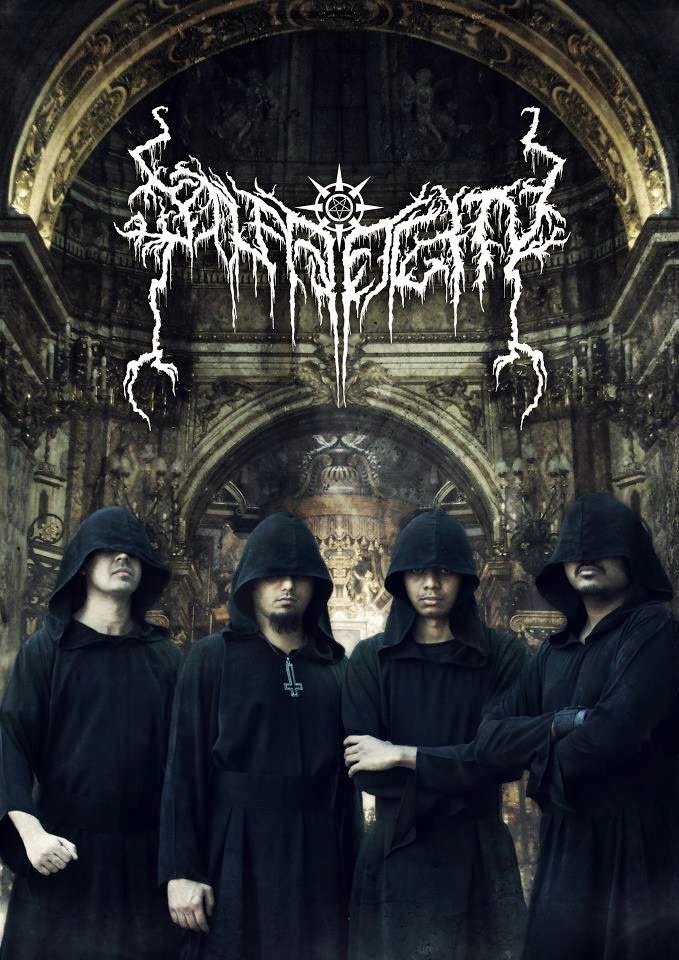
THE CHILDREN OF SATAN: Black Metal as the present day proliferator of Satanic, Pagan and ancient Germanic myths

A Daily Mail (UK) article published on their website on the 15th of January 2014

INTRODUCTION

As recently as 16th January, 2014, this news piece about an obsessive fan killing a Black Metal musician for 'not being Satanic enough' made international headlines. It shocked the international music fraternity and harked back the early days of Black Metal in the 80s, which was characterised by a lot of violence.

Dark lyrics, an extreme subculture and violent imagery are among the hallmarks of Black Metal, which borrows heavily from the darker aspects of Heathen and Germanic in addition to Satanic mythology. Bloodlust, arson and murder characterised the second wave of Black Metal during the 90s, but things had somewhat sobered in the last couple of decades. The news of this murder reminded people how deep 'Satanic' influences still run in some parts of contemporary society, (no) thanks to the Black Metal scene.


This paper attempts to chronicle the influence of Satanic, Pagan, Heathen and Norse mythology on Black Metal music, the symbols associated with it, the evolution of these myths; and finally to understand how some ancient myths continue to influence popular culture and consequently our lives.

BASIC TENETS

Before we move on to exploring the mythological connections of Black Metal, here are a few basic concepts explained, based mostly on Wikipedia.

Black Metal: Black metal is an extreme sub genre of heavy metal music, often having lyrics which deal with the Devil and the supernatural. Often synonymous with Satanic Metal, Black Metal has now incorporated more mythical elements (apart from Satan) into its fold. While some bands continue make pure 'Satanic or anti-Christian' music, some others have lyrics about heathen/pagan/Nordic characters like Odin, Thor, Prometheus, the Vikings, etc. These further derivatives, who often reject Satanism, go by the name of Viking Metal and War Metal.


Common traits of Black Metal music include fast tempos, shrieked vocals, highly distorted guitars played with tremolo picking, blast beat drumming, raw (lo-fi) recording and unconventional song structures.

White/ Unblack or Christian Metal bands borrow from Christian scriptures and imagery for album art 


Interestingly, there are completely oppposite sub genres called Unblack Metal and White/ Christian Metal too. These have the musical style and constructs like that of Black Metal, but are ideologically its diametric opposite, promoting Christianity and Christian imagery. 

Death Metal: Closely linked with Black Metal is Death Metal, which explores themes of violence and often elaborates on the details of extreme acts, including mutilation, dissection, torture, rape, cannibalism, and necrophilia. It sometimes employs Satanic imagery, thus overlapping in places with Black Metal. 

Death metal bands like The Intestinal from Sweden often use gory and violent imagery on their album covers, but Satanic motifs are also seen

Death Metal typically employs heavily distorted guitars, tremolo picking, deep growling vocals, blast beat drumming, minor keys or atonality, and complex song structures with multiple tempo changes. 
Other loosely related sub genres include Dark Metal, Doom Metal and Thrash Metal.

Satan: The concept of Satan comes from Abrahamic religions with references found in Jewish, Islamic and Christian texts. His primary traits are deceptive, tempting and evilness.  The word 'Satan' in Hebrew loosely translates to 'accuser' or 'adversary', but the character was developed into a full-blown evil one – the devil – subsequently. He is often identified with Lucifer, the fallen angel, who rebelled against God and became ruler of the netherworld.  


Gustave Dore's illustration of Satan from Milton's Paradise Lost
Satanism: The Satanism is a broad term referring to a group of Western religions comprising diverse ideological and philosophical beliefs. Their shared features include symbolic association with, or admiration for the character of Satan, and Prometheus, which are in their view, liberating figures. While it has been practised by underground groups in one form or another since the early days of Christianity, Satanism as we understand it today, caught on with the establishment of the Church of Satan in 1966 by Anton La Vey. 

Famous metal artiste, Marilyn Manson with Anton La Vey

There are two primary kinds of Satanism – theistic and atheistic. Theistic Satanism aka Traditional Satanism, Spiritual Satanism or Devil Worship believes in a deity of Satan and other magical and ritualistic practices. Atheistic Satanism, as perpetuated by La Vey is more philosophical in nature.  Its teachings are based on individualism, Epicureanism, and an "eye for an eye" morality. Unlike theistic Satanists, LaVeyan Satanists are atheists who regard Satan as a symbol of man's inherent nature. La Veyan Satanism was made popular with the publishing of The Satanic Bible in 1969.

Ásatrú: Ásatrú is an Icelandic (and equivalently Old Norse) term consisting of two parts. The first is Ása-, genitive of Áss, denoting one of the group of Norse gods called Æsir. The second part, trú, means "faith, word of honour; religious faith, belief". Thus, Ásatrú means the "faith/belief in the Æsir". Ásatrú is variously known as Heathenism, Paganism, Odinism,  Forn Siðr, Wotanism, Theodism, and other names, is the contemporary revival of historical polytheistic Germanic paganism. 

Prometheus:  In Greek mythology, Prometheus (which might mean 'foresight') is a Titan, culture hero, and trickster figure who is credited with the creation of man from clay, and who defies the gods and gives fire to humanity. Zeus, king of the Olympian gods, sentenced the Titan to eternal torment for his transgression. 


A classical painting depicting Prometheus being 'eaten alive' by Zeus' eagle.

The immortal Prometheus was bound to a rock, where each day an eagle, the emblem of Zeus, was sent to feed on his liver, which would then grow back to be eaten again the next day. Because Prometheus' gift of fire to mankind enabled progress and civilization, he is known as a champion of mankind.

The punishment of Prometheus as a consequence of the theft is a major theme of his mythology, and is a popular subject of both ancient and modern art. 

Odin/ Wodan/ Wotan: Odin is a major god in Norse mythology, the Allfather of the gods, and the ruler of Asgard. His name could mean 'fury', 'excitation', besides 'mind', or 'poetry'. His role, like that of many of the Norse gods, is complex. Odin is a principal member of the Æsir and is associated with war, battle, victory and death, but also wisdom, Shamanism, magic, poetry, prophecy, and the hunt. Odin has many sons, the most famous of whom is the thunder god Thor.


A modern graphic image of Odin

Thor: In Norse mythology, Thor is a hammer-wielding god associated with thunder, lightning, storms, oak trees, strength, the protection of mankind, and also hallowing, healing and fertility. Thor's hammer and chariot pulled by two goats are important icons, adopted in the artistic tradition.

Thanks to Marvel comics and the recent Hollywood movies featuring Chris Hemsworth as Thor, this old Norse God has come back into the spotlight


Oskorei/ Wild Hunt: Both Odin and Thor, especially Odin, have been associated with the Wild Hunt or Oskorei. The Wild Hunt is an ancient folk myth prevalent across Northern, Western and Central Europe in which a phantasmal, spectral group of huntsmen with the accoutrements of hunting, with horses and hounds in mad pursuit across the skies or along the ground, or just above it. 


The myth of the Wild Hunt is often used to explain the phenomenon of thunderstorms. This illustration of an Oskorei was used as the cover art for Swedish band, Bathory's album - Blood Fire Death

The Vikings: The Vikings were seafaring north Germanic people who raided, traded, explored, and settled in wide areas of Europe, Asia, and the North Atlantic islands from the late 8th to the mid-11th centuries. A romanticised picture of Vikings as noble savages began to take root in the 18th century, and this developed and became widely propagated during the 19th-century Viking revival. The received views of the Vikings as violent brutes or intrepid adventurers owe much to the modern Viking myth that had taken shape by the early 20th century.


New age digital art representing a Viking

BLACK BEGINNINGS – THE FIRST WAVE

The Christian world saw the emergence of a cult of Anti-Christian musicians in the early 1980s, who formed Black Metal bands. The first among these, comprising bands like Venom, Bathory, Hellhammer and Celtic Frost set the Satanic stage for this subculture in the Scandinavian nations. In fact, it was British band, Venom's second album, Black Metal, from which this genre gets its name. Other early bands, which strengthened the Satanic and Pagan associations of Black Metal included the Swedish band, Bathory and  Mercyful Fate. 


Venom band members Mantas, Cronos and Abaddon and the cover of their second album, Black Metal

America too witnessed a rise of bands with dark themes, such as Slayer and The Misfits. However, Satanism was always watered down, and '...never seemed to achieve quite the unadulterated level of blasphemy weilded by the British founders of Black Metal..' say Michael Michael Moynihan and Didrik Soderland in their acclaimed book, 'Lords of Chaos: The Bloody Rise of Satanic Metal Underground.' 


Although a Death Metal band, Deicide made ample use of anti-Christian symbols, like the inverted cross, in their cover art and lyrics. This is the cover of their 8th album.

Bands like Deicide, who flamboyantly adopted the upside down cross and resorted to bloody theatrics on stage were exceptions. Death and Thrash Metal with half-baked Satanic ideas, which were popular in the late 80s, began to lose their appeal and the audience wanted something darker and edgier, making way for the second wave.

DARKER TIDINGS – THE SECOND WAVE

Black Metal, at least in its Norwegian “second wave,” is commonly described as Satanic, largely due to the influence of the mass media, which portrayed the genre as such. In fact, much of media fodder was provided by a Norwegian band called Mayhem, established by Øystein 'Euronymous' Aarseth in 1984, along with  Jørn 'Necrobutcher' Stubberud and Kjetil Manheim. They were later joined by Varg 'Count Grishnackh' Vikernes and  Per Yngve Ohlin, whose stage name was 'Dead'. Apart from their dark music and ideology, the band drew a lot of controversy with respect to arson, murder and a suicide.

In 1991, band member 'Dead' committed suicide by shooting himself in the head in what seemed like an act of self-fulfilling prophecy. Dead had a history of self harm and often cut himself during live performances. Band member Euronymous allegedly clicked a picture of the scene of Dead's suicide and used the image as an album cover to further Mayhem's cause.


Mayhem album 'Dawn of the Black Hearts' featured an image of Dead's corpse

In January 1992 Burzum’s Varg Vikernes gave an interview where he claimed responsibility for a number of church burnings, which led to a moral panic and a media frenzy focused on stories about “Satanism in Norway.” This escalated a year later with Vikernes’s murder of Euronymous, and the convictions of several individuals involved in Black Metal for a number of the church burnings that had occurred in Norway in the early 1990s. The Norwegian documentary film Satan rir media (Satan Rides the Media) clearly shows how the Satanism-label was applied by the media, how dubious “cult experts” validated this, and how the number of arsons drastically increased in the process—from approximately one per year in the early 1990s to fifty arsons altogether between 1992 and 1996.


The band Mayhem with Euronymous (L) and Dead (R)

Satanism became an identity marker in Black Metal, largely due to the media-created Satanism providing a “script” for Norwegian “second wave” Black Metal musicians and fans.

Mayhem gave the underground music scene much more than their music. The tradition of  black leather outfits, metal spikes, corpse paint can be credited to Euronymous, and Black Metal bands across the world today are seen dressed in similar outfits, using similar Satanic symbols.


The band Immortal performs on stage wearing typical gear and corpse paint


POPULAR SIGNS AND SYMBOLS IN BLACK METAL
        
INVERTED CROSS
Used widely as an anti-Christian symbol in the Black Metal community, it is in fact, quite Christian in its origin. The inverted cross is the sign of St. Peter, who deemed himself too unworthy to be crucified in the same manner as Christ, and hence chose an inverted one. However, in the metal music context, an inversion of the primary symbol of Christianity is meant to signify an opposite path.
THE PENTAGRAM 

A pentagram (sometimes known as a pentalpha or pentangle or a star pentagon) is the shape of a five-pointed star drawn with five straight strokes. In medieval Christian tradition, the pentagram could represent the five wounds of Jesus. In the Renaissance it came to be associated with magic and occultism. The inverted pentagram, as used by English black magician, Aleister Crowley and Anton La Vey, founder of the Satanic Church, came to be associated with Satanism. It is a popular with Black Metal bands and modern day Wiccan cults.
BAPHOMET / DEVIL'S HORNS

Baphomet - from the from medieval Latin Baphometh - is a term originally used to describe an idol or other deity, which the Knights Templar were accused of worshiping, and
subsequently incorporated into disparate occult and mystical traditions. Baphomet is often synonymous with Satan/Lucifer, and hence the raised fingers could either mean Satan's horns or Baphomet's. Modern day Black Metal fans use the hand sign as a customary salute.
SKULLS

For anyone even remotely aware of the heavy metal culture, the skull will be a familiar sign. Representing death and destruction, the skull is a favourite element of artists
designing extreme metal album covers.
TRIQUETRA

The Triquetra is an originally Christian symbol, which often signifies the Trinity. However, Pagans consider the symbol sacred too and it might signify three divine elements. However, some have interpreted it as a hidden symbol for the number of the Devil – 666, and hence one comes across the Triquetra in the context of Black Metal.
SIGN OF ANARCHY

Anarchism has a long-standing relationship with the arts, particularly music. As a symbol of opposition to any form of authority, all extreme music embraces anarchy. Punk rock is most associated with the sign, although some death and black metal bands employ it occasionally.
Other common symbols and themes include the Werewolf, the moon, the colour black, fire, blood, virgins, dark priests, forests, crows, etc. 

WRIT IN BLACK

Apart from symbols, Black Metal carries forth the myths of Satan, and other Pagan characters through its explicit, blasphemous and sometimes downright disturbing lyrics. There are ample Christian and anti-Christian references, like Sabbath, Exodus, Day of Judgment, the pact with the Devil, sacrifices, Black Masses, etc. Such extreme lyrics sway teenagers, who are the largest consumers of such music. There have also been instances of suicides influenced by such music and ensuing lawsuits. However, dark myths continue to be fostered through the Black Metal underground culture. Here are some instances: 

• Gorgoroth – Satan-Prometheus 

See the hordes ascend
Crushing the face of god
See the horns rise
The eternal reign of Satan

• Solar Deity – Through the hallway of Narak

Satan… bless my soul
Father… we are yours
There is one god
Dark lord, you’re the one!

Indian black metal band, Solar Deity

• Nunslaughter – Satanic

Lucifer's grip upon the throat
Of the catholic priest
Asphyxiate eviscerate
The holy are deceased

• Mayhem- Pagan Fears

Pagan fears
The past is alive
The past is alive
Woeful people with pale faces
Staring obsessed at the moon
Some memories will never go away
And will forever be here

• Burzum – Lost Wisdom

Other planes lie beyond the reach
of normal sense and common roads
But they are no less real
than what we see or touch or feel
Denied by the blind church
'cause these are not the words of God

• Bathory – Sacrifice

Present at ungodly births
In holy paradise
I spread eternal dark on earth
And raped the mother of Christ

• Bathory – Shores in flames

Thor of thunder way up high
Swing your Hammer that cracks the sky
Send the wind to fill our sails and take us home
Guide your sons, us, home

CONCLUSION

Religion and the arts have always been carriers of myth. Since music as an art form has a wider appeal than most others, myth in music has been common across nations and genres. Whether one sings hymns in praise of God, chants praises of natural beauty, or rages against convention, myths are always useful in conveying an idea more powerfully. 

In the realm of Black Metal too, Satanic and Pagan myths are used mostly for artistic purposes than as ideology. Very few Black Metal artists admit to following Satanism in their everyday lives. Their dark costumes and stage ‘rituals’ are more for shock and entertainment value than anything else. There are crazed fans and extreme instances like the murder of the Thai Black Metal artiste are few and far between. 

Black Metal ‘arrived’ in India around the year 2000, but very little has happened since then. There are not more than five bands that play serious Black Metal. These bands are wholly inspired by their Western counterparts and their music is inspired by the same set of myths and ideas. Avid heavy metal follower and blogger, Devdutt Nawalkar succinctly sums up the Indian Black Metal scene, “There aren't any bands that make studied use of Satanic literature and symbols to the best of my knowledge. I can only think of Solar Deity from Bombay who claim to be influenced by Anton Lavey's cult of personality (the Satanic Bible is nothing but a trussed up self empowerment course), and Witchgoat from Bangalore who use various hackneyed cliches like inverted crosses, Baphomets and pentagrams as an ironical tool to make fun of black metal. Metal fans in India will regularly use flippant salutations like "Hail Satan" but it's little more than juvenile delinquency acted out to appeal to the outsider within. Indian Vedic literature has a formidable canon on atheism that deals with very pertinent questions of existence itself; we don't need to "Indianize" what is essentially a Judeo-Christian concept.”

------------------------------------------------------------------------------------------------------------

This assignment was part of my PG Diploma Course in Comparative Mythology, at the Department of Sanskrit, University of Mumbai, for the academic year 2013-14, Sem. 2, Paper II. Images have been sourced from the Internet and none belong to me.

Monday, January 06, 2014

Rogerson's Book of Numbers: Impressions


It's hard to review works of non-fiction, especially if they're the kind that pack in trivia. But I am compelled to write some words of glowing praise for this wonderful book called Rogerson's Book of Numbers. I picked it from from the Mumbai airport and it was easily one of my best buys for 2013. Author Barnaby Rogerson collects numerical gems from around the world, across all possible subjects to compile this fantastic go-to book about numbers.

When William Dalrymple testifies for it as a book that is 'Dangerously addictive, wonderfully witty and crazily wide-ranging and erudite,' he doesn't lie. The Book of Numbers totally hijacked my time and made me put down another book I had just started. It doesn't help that I am a student of mythology and feel compelled to devour any information that is related to the subject. But this book has numerical references from not only mythology, but also literature, religion, popular culture, politics, sports, cinema, superstition and more!

The author starts with the largest numbers and goes down to zero, presenting fascinating insights into the culture of many a place through the stories about numbers. It is quite the perspective changer, when one reads about the the vastly different associations a number has in different cultures. A number that is considered unlucky in Europe, for example, might be thought of as auspicious in China. The book is full of eye-opening facts and a treasure trove of number-facts.

A work that is surely the outcome of painstaking research, The Book of Numbers is a worthy addition to your bookshelf, whatever your area of interest. Its crisp style and easy indexing makes the book a handy little guide. And with the little glimpses it offers into an array of interesting subjects, it will lead the reader on to greater discoveries.

Buy it.


Friday, May 04, 2012

Trividha


Dusk had started its greedy journey of claiming real estate across the lands. Like a witch’s sinewy hands shadows grew, consuming a chunk of grass here, some trees there. Soon the land would be flooded with darkness. A darkness that perhaps no new sun would be able to erase again completely. The skies bore a hint of melancholy as she waited, patiently, for their arrival. But within her, behind the veils of reasons, a storm awaited.

The air was thick with incense. An everyday ritual in the palace, whenever the sun took a graceful exit. But that particular day she felt as if the smoke would snake across the gleaming floors, crawl up around her like an innocent creeper and choke the remaining life out of her. Such had been the impact of the news she had received. She could no longer see the poetry of the colours that had always been her one resort of solace. No more would the fragrance of flowers bring her peace. Not that day would the arrival of her heart’s beloved master and emperor, Arjuna, make her rush to the threshold to greet him into her arms. Everything was whirlpooling into a blank. A void. And she had started to ask questions that she feared she already knew the answers to.

He mused at the lightness and heaviness of the air. The breeze brushed past his arm as playfully as ever, fragrant like the new bride by his side, yet it was laced with a gloom, a cold, that he knew the palatial air would be like. He absently placed his arms around that warm nubile body as they walked, his steps light with anticipation, and heavy with guilt. Subhadra, that beautiful creature made of misty mornings, seemed to be floating alongside him. So different she was from Draupadi - that woman of flaming beauty. Yet how similar they were in their love for him. He sighed, his broad shoulders drooping under the weight of what was to be. “I should learn to live with paradoxes now,” he thought to himself. Even as a gale began to rise from the pit of his stomach, he wondered what was going through Subhadra’s mind, and let the chariot soar.  

She repeated her name in her own head, over and over. Subhadra, Subhadra. Auspicious. Blessed. Her whole life had brought her to this one juncture where she was on the brink of questioning why she was here. What was she learning? She felt Arjuna’s body radiating guilt and a measure of worry as they swooped towards Indraprastha in the air-borne chariot. She was reminded of a child that had to go home after a day of rule-breaking to a waiting mother, ready to be chastised. It almost made her smile. Auspicious? Who could ever tell what Krishna had planned for her, for Arjuna, for Draupadi? But she had learnt one thing from all her time with this flute-player that everybody seemed to adore; everything you perceive is the tip of the iceberg. As they stepped out of the chariot and walked up the palace stairway, she remembered that it was she who had ridden the chariot. She had made Arjuna elope with her, albeit on Krishna’s instructions. She knew she could shield Arjuna. She also knew she would never have to do that until Krishna called for it.

The chambermaid came in and announced that the valiant Pandava had arrived with his new bride. Without batting an eyelid, Draupadi nodded her head in acknowledgement. It was so mechanical and instant that it was almost as if she had heard the maid’s voice inside her head. “Here he comes now” she told herself and began walking towards the main door. “How do I make him see what burns inside me?” she wondered, as her legs, unwillingly, dragged her towards him. “What misses the great Gandiva-bearing Pandava’s eyes? Nothing.” she reminded herself and approached the giant gold embroidered doors that somehow seemed taller than usual. Heavier and more merciless than what she had of them in memory. Every inch of her body was aflame with feelings that had been so alien to her. But she was no stranger to fire. It was her home, after all. So she awaited the pristine moment that would convert this raging wildfire inside her into a placid lamp.

The first thing she spotted was just Arjuna. For a fleeting moment all the rage within her disappeared. Could it be true? Was it really just him who stood there outside the door? Had he abandoned the idea of crushing her tender heart and decided to smother it with more love instead? A droplet of happiness pushed itself out of her eyes as these thoughts made home within her. But as she blinked in anticipation, the mist grew thin. And her smile, shaped like the beautiful Gandiva, was cruelly broken. Standing next to her Arjuna was the new girl. Krishna’s sister and the new stakeholder of her beloved’s heart. Subhadra. The tears in her eyes froze from the heat that now surged through her, turning them from transparent pearls to translucent sparks. Red with reason. Red like the tongue of a flame.

Arjuna froze too. Draupadi’s eyes locked into his, a million images flashed through his head. He remembered the Swayamwara, and Draupadi’s eyes when she first saw him there - she had smiled a bashful yet knowing smile. She knew that no one but him could win the contest. It was designed for the archer supreme. He remembered her victorious eyes again, when he stood before her, neck bent to wear the varmala, past all his contenders. Her eyes full of dreams when they walked together towards the Pandavas’ kutir in the forest. Her confused eyes when Kunti and Yudhishtir discussed dividing her into five parts. Her hurt, angry eyes, when they made the biggest decision of her life. Nobody had asked her then. Nobody had asked her now. She had acquiesced then to not giving all of herself to Arjuna. But would she agree now to not having Arjuna all to herself? Would she agree to a painful splitting again? He couldn’t tell.

All Arjuna saw were proud, angry tears, that streaked Draupadi’s fiery beauty. The tears singed him. How would he ever explain why Subhadra was here at her door, claiming to be another wife to him? How would he explain that his love for Draupadi hadn’t died, but a new love for Subhadra had been born? He summoned his voice with great difficulty. Words came forth from his throat like arrows, hurting his mouth, his head, his entire being. “I come to ask of you again today, to share what you hold dear. Would you, my love, give up a little of me?” His sigh melted into Subhadra’s - two united breaths. The first words had been uttered. They didn't know if it would annihilate them or embrace them - but at least the floodgates had been opened.

The wind from Arjuna’s and Subhadra’s sighs amplified the already roaring firestorm inside Draupadi. She collected herself, inhaled deep, and looking at Subhadra’s downcast eyes, said in a clear distinct voice  “Greetings, O great son of Pandu. Would you be so kind as to also tell me why this is being asked of me?”

Subhadra put a restraining arm on Arjuna. She had sensed his lips part, ready with a reply but she had also seen Draupadi’s eyes boring into hers. She knew it was a question thrown at her. She could see that Draupadi, this glorious, powerful creature literally born of fire, had faced betrayal before from Arjuna. She hardly expected an answer from him. But a woman, a woman just like her in so many ways, how could she do this to her? There were a thousand questions in Draupadi’s fiery glare but Subhadra was protected. She looked into those red eyes, gently tilted her head and noticed something. She was home. There was Krishna everywhere. There were his symbols strewn across Indraprastha and in this moment, when those should be least of her concerns, Subhadra’s heart leapt in joy.

Peacocks strolled languorously in the sweeping gardens surrounding Indraprastha. She heard the gentle note of a flute playing somewhere far away. Draupadi was exactly how Krishna had described. In that one moment, she knew she was meeting a part of her own soul; a lover of Krishna, no different from who she was. Arjuna’s first queen, no different from who she was. “You don’t have to,” she whispered, glancing at Draupadi’s red-lined feet. “Krishna sends me.” A tear drop rolled down her eye as she uttered her only truth.

For a brief moment Draupadi’s fury seemed to find a sense of calm. Such a magical concoction lay in Krishna’s mere mention. In Subhadra’s words she could almost hear Krishna’s melodious voice. She relented, briefly. And in that brief instance she realised how tender Subhadra really was. Krishna’s name in the conversation had started to kill the fires. But it wasn’t comforting. The sting of desperation resumed with renewed energies when her gaze shifted to Arjuna, standing like a rock, next to the new girl.

“Did Krishna just send this new gift to Indraprastha? Or did he also send some arrow-tipped words with the great Arjuna? Why do I not see that quiver strapped to his person? What words will you choose, O famous Pandu putra,  to explain this truth to me?” Draupadi said, without mincing her words, aiming them straight at Arjuna’s bosom.

“How do I say this, Panchali?” Arjuna began. “ How do I begin to mirror what churns beneath my skin? How do I explain the motivations of Keshava, which my actions have fructified?”

“He, who is sarathi to me, sakha to you, and bhrata to Subhadra has brought us together, like three flowers bound with one string. While it was Madhava who prompted me, Subhadra who whisked me away, it was I who has chosen to love and be loved back. Yet, dear Draupadi, I love you no less. While it was in the soil of your heart that my love first took root, I cannot now thrive without the water of Subhadra’s affections. And the sunlight of Dwarkadhish’s blessing is indispensible for all of us. You have been, and remain, my first love. In the name of that love, I implore you, in the name of our rashtra, I implore you to accept Subhadra. Accept her because it is Krishna’s will, accept her because it is my doing, accept her because it will make our state stronger. Accept her as you will partake in all of my karmas as my ardhangini. Accept her as your sister. All Subhadra seeks is a little place by your side, our side,” he said, turning towards his new bride.

Draupadi looked away. Krishna, it occurred to her, had indeed sent well-sharpened arrows with Arjuna. Each one of them made their mark on her hurting heart. With each new pierce the grief and rage in the pit of her stomach only worsened. Her mind was filled with memories.

“Acceptance...,”she said slowly. “You have chosen your words wisely, O valiant one. Many moons ago, was it not this same request for acceptance that gave me more than the man I had chosen at my Swayamwara? Was it not the same venom of acceptance I had been made to forcefully consume in the name of dharma, in the name of rashtra, in the name of the betterment of all humanity? What guile had been used against me back then to accept five husbands instead of one? How strategically was I implored, time and again, to consume within me the flames of someone else’s decisions? A land that was supposed to be your empire, a haven that would flourish with your monarchy, a golden oasis of nectar that would extinguish the flames of my passion, had to accept the hands of four more men to rule it. Yes, I accepted. I accepted relinquishing you for four years at end. I accepted standing equally with your shadow wherever you went. I accepted the tiny piece of attention I got from your war riddled lifetime. I accepted them all Partha. But the only gushing waterfall in the dense rainforest of my little heart. That one small stone of pleasure on which I sit today along with you in my arms....”

She turned now to face Subhadra.

“...is being taken away from me. That singular tree I sit under. Krishna’s truth, I must admit...” Draupadi continued as the ghosts from her days bygone began choking her voice. “...is not cutting down that tree Gandeevi. It is killing that tree’s only existent, life-giving, pleasant shadow. And what is a tree without a shadow? That, I cannot accept, O Dhananjaya...” she said looking expectantly into her beloved’s eyes.

“Do not accept it, then," said Subhadra. You are well within your rights to send me back. You are my king’s first queen. He first found love in your eyes, in your embrace. The love of an equal, the love of a woman, he found it first in your words and your silences. And I? I am but a pawn in this story of life. While I have loved your Arjuna more than I have ever loved any man, I harbour no illusions about what position I hold in his life, and in your life with him. I know why Krishna chose to name me Subhadra. I know I am being used. But that also tells me that I am useful. I do not know what Madhava plans. I am blessed with only human eyes and a human intellect and it is not for me to show you what lies beyond the horizon. I can only tell you that I place my unflinching faith in Govinda, in his plans, no matter how dark the clouds loom over the horizon.

“So send me back. But know this, Panchali, that the responsibility of refuting Krishna’s word rests heavy on your already-laden shoulders. Know this, O Krishnaa, that you make Krishna who he is. To refute his word is to go against your own grain. Remember. And I shall go in peace.”

Arjuna looked distraught. Tearing in the middle, fraught with pain. He looked at Subhadra, in awe of her stand. Yes, she was a woman who could steer destinies as well as she could steer chariots. She was, after all, Parthasarathi’s sister. Then he looked at Draupadi, a woman cast in embers, flaming with a passion of love and defiance, teetering on the edge of a decision.  

Draupadi smiled. Not at what had been said by the new love in Arjuna’s life but at the familiarity of the situation. She recalled the words of her father, the great king Drupada, back when she was just a child. On an evening not too unlike the one that day, the aged king had made little Draupadi sit on his lap and told her the magical story of her birth. He had spoken of sacred fires, as tall as mount Meru itself, that had roared relentlessly for several days as many renowned sages had prayed to the heavens to grant the king a gift. “The gift,” Drupada had whispered in the little girl’s anxious ears “was wrapped in gold, yellow and red. It was made of fire. It was as if Lord Agni himself had walked into my humble home holding this beautiful little bundle of unbridled bliss. A little girl born of fire. A little soul that had the command of turning empires to dust with its fury and also the gentleness of giving warmth to shivering mortals.” The girl, amused at this comparison to fire, had laughed out loud. “Yes..” the king had added. “In time, you will see my little fire flower, that there will gather skies above your head that will need you to choose. What kind of fire will you unleash? Will you burn down castles of ambitions? Or will you set afire a million hopes?”

A tear rolled down Draupadi’s cheek. Much like the one Subhadra had let out a few moments ago while releasing her truth. This was Draupadi’s truth now. Her lifetime of truths wrapped in various boxes of acceptance from different corners of the universe. Her dark exterior had, much like the shadows cast by the Parijata tree, absorbed all the heat the world gifted her with. She recalled Arjuna’s look of surprise and admiration back at the Swayamwara at having spotted her singular beauty. But she wondered if he knew how many rabid energies had penetrated her to make her glow from the inside. Today, under the skies as dark as her, Draupadi was being asked the same question her father had asked her. What will she be? The generous flame that consumes everything it is presented with? Or the uncontrollable hurricane of anger that spares no one, vaporizes anything that comes its way?.

“Krishnaa exists because of Krishna...” she finally managed to mouth. “Had it not been for the immortal hands of Keshava, the many mortals who have ruled Draupadi’s heart would have extinguished her long ago.”

She looked at Subhadra. It was true what she had heard of her. Just like her brother, she had been born with the gift of words. But how different she was from him too. Unlike him, who chose his words to show the way ahead, her words seemed aimed to herald the truth of today. This moment. This heartbeat.

Subhadra stepped carefully over the threshold and approached Draupadi. Draupadi stood, barely balancing herself on her two feet, almost in a daze. Subhadra covered the last few steps towards Draupadi in a run and clasped her arms around her. “I know. I stoke no fire. I am not water. I will never put you out. I am Krishna too. And I will hold this earth beneath your feet. Forever and beyond,” she whispered. Words that passed only between her and Panchali. Draupadi felt frail in that one moment, like embers about to die out and Subhadra knew it was her job to fan them to keep them going. There was a long journey ahead. This life had hardly begun.

Draupadi’s fury came out as tears. Much like the waterfall in her mind’s forest, this was generous too. Much like the shadow of her singular tree, this was greedy too. Greedy not just for claiming Arjuna’s sole rights to her heart, but greedy for this new vision of Krishna to, hopefully, make the forest fire in her become a lamp that would brighten the dark days strewn like fallen flowers ahead. She held on to Subhadra.

Subhadra held one hand out behind her. They would never be complete without Arjuna. Arjuna held it fast.

In that one moment a confluence was created. The life forces of three strong streams merging into one. The barriers breaking between the elements of fire, water and earth and forming one divine. Arjuna saw Draupadi melt, forging a bond between her and Subhadra, forming one Prakriti with two faces, to accompany him, the Purusha, into the future. “Paradoxes,” he mused, “exist only as long as we fail to perceive the larger, divine picture.”

By accepting duality, we understand the presence of the One. It is this One that may sometimes play life’s sweet music on the banks of the Yamuna, and sometimes send life’s toughest choices in the way He sent a Draupadi, a Subhadra, an Arjuna, a Draupadi and a Subhadra, an Arjuna.


(Co-authored with @Shakwrites and @ScrollsNInk)

-------------------------------------------------------------------------------------------------------

Leela struck some deep chords, not just within me and Reema, but also in some others who read us. One such person was our mutual Twitter friend Shakri, who expressed interest in doing another collaborative project on a mythological subject with us. We were only delighted to agree, and after some deliberation agreed to write a fictional piece based on the Mahabharata on the Draupadi-Arjuna-Subhadra situation. And we did. We picked one character each by drawing lots and put together a spontaneous piece that has taken the form of Trividha. I will not reveal who wrote what. If it seems seamless, the purpose was achieved.